
Punjab PSER Survey Online Registration 2026 For Ramzan Package
PSER Survey Online Registration has become essential because the government no longer relies on manual lists or local recommendations for Ramzan relief. Instead, decisions are made using verified household data already stored in the PSER system. This shift has reduced complaints and made distribution more transparent.
From what I have observed, families with complete PSER profiles are processed faster when relief phases begin. Those without updated records usually rush at the last moment and then face delays. PSER allows authorities to see your financial condition, family size, and living situation in one place, which helps them decide fairly.
Key reasons PSER is critical for Ramzan relief include:
- Relief selection is based on PSER data, not applications
- Updated profiles are prioritized during distribution
- Fewer verification problems during Ramzan
- No repeated document submission for each program

PSER Registration Purpose and Process
PSER, or Punjab Socio-Economic Registry, is a digital household database. It records essential information about your family so the government can understand who needs support and who does not. Instead of asking citizens to register repeatedly for different schemes, PSER serves as a single verified record.
The system operates digitally, reducing human error and duplication. Once your household information is entered and verified, it stays in the system and can be used for multiple welfare programs, including Ramzan relief, health support, and education assistance.
PSER data is collected through:
- Online self-registration via the official portal
- Door-to-door surveys by trained teams
- Digital verification linked with CNIC records
Read More About: Register Process by the SMS 8070
How the Ramzan Relief Package 2026 Is Connected with PSER
For Ramzan 2026, the Punjab government is using a need-based system instead of open distribution. This ensures that only deserving families receive financial support or subsidized rations during the holy month.
PSER plays a key role in this process by collecting verified household data. Using PSER records, authorities assess factors such as family income, number of dependents, and whether the household is already receiving any government assistance. Based on this information, relief beneficiaries are selected fairly and transparently.
This system helps make sure that limited resources reach families who truly need support, especially during Ramzan when household expenses increase.
Who Can Apply for PSER
PSER is not limited to one category of people. Any household living in Punjab can register. Eligibility for Ramzan relief is later determined based on the information provided, not at the registration stage.
In general, priority is given to families with limited income and higher dependency. Even if you believe your income is slightly above average, it is still better to complete registration so the system can assess your case fairly.
Commonly prioritized households include:
- Low-income and daily wage families
- Widows and persons with disabilities
- Elderly citizens without a stable income
- Large families with a limited earning member
Information You Need Before Starting Registration
Many people abandon registration halfway because they are not prepared. Before starting, gather all required information so the process is smooth and uninterrupted. Accurate data entry saves time later during verification.
You should have:
- CNICs of all adult family members
- Active mobile number registered with CNIC
- Approximate monthly household income
- Housing details and utility connections
- Education and employment information
PSER Online Registration 2026
The online registration process is simple, but it requires attention. From experience, most errors happen when people rush or guess information. Take your time and enter details carefully.
The basic steps include:
- Open the official PSER portal
- Create an account using your CNIC
- Verify your mobile number via OTP
- Log in and add household members
- Enter income, education, and housing data
- Review and submit your profile
Once submitted, your data enters the verification stage and cannot be edited until reviewed.
Door-to-Door PSER Survey Option
For citizens who are not comfortable using online systems, door-to-door surveys remain active in many districts. Trained teams visit households and record information digitally. This method is especially helpful for elderly citizens and rural families.
Even if you have already registered online, a survey team may still visit to confirm details. This is part of the verification process and should not be taken as a problem.
Important points to remember:
- Surveys are completely free
- Teams do not ask for money
- CNIC verification is mandatory
Verification Process After Registration
After submission, PSER data goes through several checks. CNIC details are matched, and household information is reviewed for consistency. In some cases, physical visits are conducted to confirm living conditions.
Verification takes time, especially before Ramzan when many households register simultaneously. A delay does not mean rejection; it usually means your profile is still under review.
Verification may involve:
- CNIC authentication
- Income and household cross-checks
- Follow-up visit if required
How Families Are Selected for Ramzan Relief
Selection for Ramzan relief is done through data analysis, not manual choice. PSER allows departments to rank households based on need and vulnerability. Families with lower income and higher dependency ratios are usually given priority.
Below is a simple table explaining how PSER data is used for selection:
|
Selection Factor |
Purpose |
|
Monthly Income |
Measures financial hardship |
|
Family Size |
Identifies dependency burden |
|
Existing Benefits |
Avoids duplicate assistance |
| Housing Condition |
Reflects economic status |
Benefits of Completing PSER Registration Early
Early registration gives you a clear advantage. Families who complete PSER registration well before Ramzan are verified on time and face fewer issues during relief distribution.
Key benefits include:
- Higher chances of inclusion
- Faster verification process
- Automatic consideration for future schemes
- Less stress during Ramzan
Common Mistakes That Delay Approval
Over the years, certain mistakes have appeared repeatedly. These small errors often result in delays or temporary rejection, even for deserving families.
Common mistakes to avoid:
- Entering incorrect CNIC numbers
- Hiding dependents or family members
- Providing unrealistic income figures
- Ignoring verification calls or messages
How to Update or Edit Your PSER Profile
If the applicant’s family situation improves or good applicant should again register in the PSER survey. So all other eligible applicants receive the government help.
Updates can be made through the portal or during a survey visit. Keeping your data current ensures you are assessed correctly for future relief programs.
How to Check PSER Registration Status
You can check your PSER status by logging into the portal and viewing your dashboard. Processing takes time, especially during peak periods, so checking daily is not necessary.
If the applicant verification is completed, the applicant profile will appear as verified. Relief announcements are made separately through official channels.
Difference Between PSER and Other Welfare Systems
PSER is a provincial registry used for Punjab-based welfare programs. Other systems handle federal assistance. Registration in one does not replace the other.
PSER focuses on:
- Ramzan relief packages
- Provincial subsidies
- Punjab government welfare initiatives
Expected Timeline for Ramzan Relief 2026
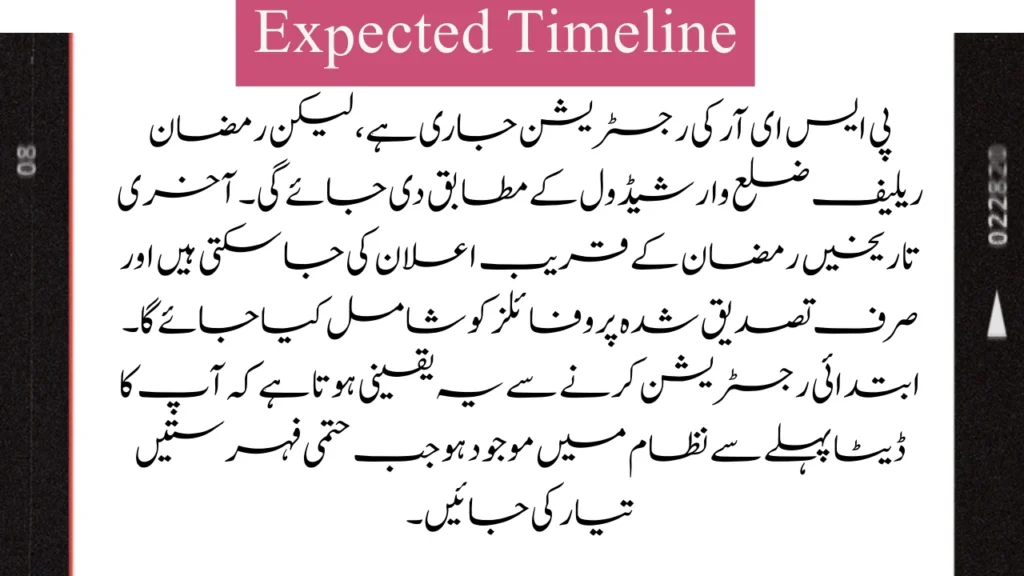
PSER registration remains open, but Ramzan relief follows district-wise schedules. Cut-off dates may be announced closer to Ramzan, and only verified profiles are considered.
Registering early ensures your data is already in the system when final lists are prepared.
Data Security and Transparency
PSER is designed to reduce corruption and favoritism. Digital records limit human interference and make the system more transparent.
The system helps:
- Prevent duplicate records
- Ensure fair targeting
- Protect household data
Conclusion
PSER stands for Socio-Economic Registry. It is a system used to verify whether an applicant is eligible for government assistance schemes. All applicants are advised to complete their PSER survey as early as possible and avoid waiting until the last moment.
If an applicant’s financial or household situation improves or changes, the PSER survey should be updated accordingly. The PSER system records important details such as family size, income status, and other related information that has already been registered. This data helps authorities make fair and accurate decisions when selecting beneficiaries.
FAQ’s
What is PSER?
PSER stands for Socio-Economic Registry. It is a system that collects household information to check eligibility for government relief programs.
Why is PSER registration important?
PSER registration is required to receive benefits like the Ramzan Relief Package, ration subsidy, or cash assistance.
Who should register in the PSER survey?
All low-income and deserving families living in Punjab should register in the PSER survey.
How can I register for PSER?
You can register through the official PSER online portal by entering your CNIC and completing the household details.
Is PSER registration free?
Yes, PSER registration is completely free. No fee is required.
